
DEXA Scans In Port Macquarie
Advanced imaging technology used to assess bone density and body composition with exceptional accuracy.
DEXA (Dual-Energy X-ray Absorptiometry) scanning is widely regarded as the gold standard for measuring bone mineral density. It plays an important role in identifying osteoporosis, assessing fracture risk and monitoring changes in bone health over time.
In addition to bone density testing, DEXA technology can also provide detailed body composition analysis. This includes measurements of fat mass, lean muscle mass and fat distribution throughout the body.
At Port Macquarie Radiology, DEXA scans provide valuable insights that support both clinical care and preventative health monitoring. The scan is quick, non-invasive and uses extremely low levels of radiation.
Other imaging services available:
X-ray - Ultrasound - CT Scanning - Interventional Procedures
Bone Density Assessment And Osteoporosis Screening
Bone density naturally decreases with age, and reduced bone strength can increase the risk of fractures. Osteoporosis is a common condition that can develop gradually and often remains undetected until a fracture occurs.
DEXA scanning allows clinicians to measure bone mineral density with a high degree of precision. The results help healthcare providers identify early signs of bone loss and determine whether treatment or preventative strategies may be required.
DEXA scans are commonly recommended for:
• individuals at risk of osteoporosis
• patients with a history of fractures
• monitoring bone density changes over time
• assessing the effectiveness of osteoporosis treatment
Early identification of reduced bone density can play an important role in preventing future fractures and supporting long-term bone health.
Body Composition Analysis
Beyond bone health, DEXA technology is also capable of analysing body composition in detail.
The scan can measure:
• total body fat percentage
• lean muscle mass
• regional fat distribution
• muscle symmetry between limbs
This level of detail provides valuable insight into overall body composition and can help individuals understand how fat and muscle are distributed throughout the body.
Body composition analysis is increasingly used in health and fitness settings as well as in clinical monitoring where body composition may influence overall health outcomes.
What To Expect During A DEXA Scan
DEXA scans are simple, comfortable procedures that typically take between 10 and 20 minutes.
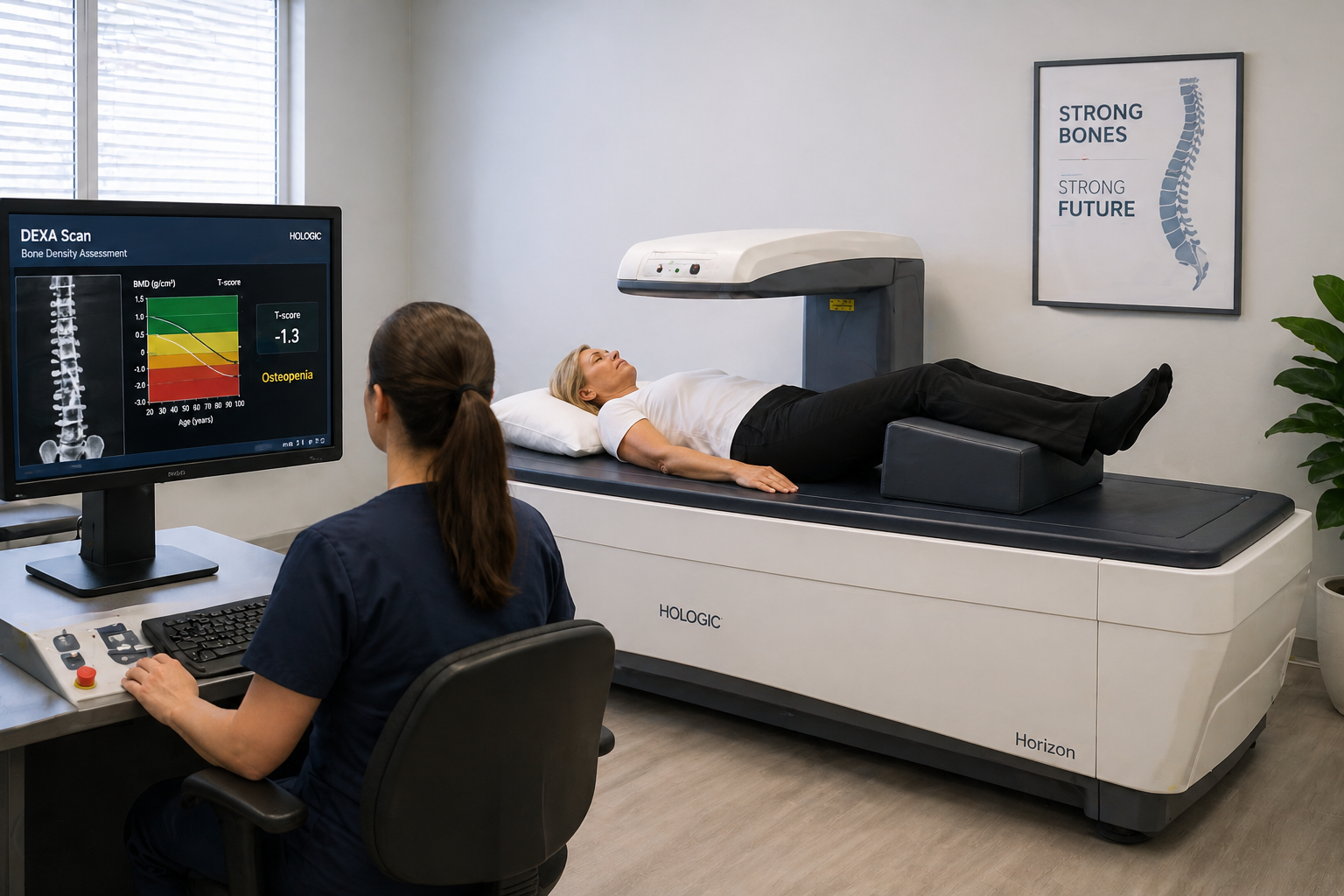
During the scan, patients lie on a padded table while a scanning arm passes slowly over the body. The process is completely non-invasive and does not require injections or contrast material.
The scanning system uses two low-dose X-ray beams to measure bone density and body composition with a high degree of accuracy.
Because the radiation exposure from DEXA is extremely low, the scan is considered safe and suitable for monitoring bone health over time.
Accurate Imaging Supporting Long-Term Health
DEXA scanning provides highly reliable data that can support both preventative healthcare and clinical treatment planning.
For patients with osteoporosis risk, the scan provides an objective measurement of bone density that helps guide treatment decisions and monitor progress. For those interested in understanding body composition, the scan offers precise insights that are difficult to obtain through other methods.
By offering DEXA scanning locally, Port Macquarie Radiology supports patients and healthcare providers throughout the Hastings Valley with access to advanced diagnostic imaging close to home.
Book A DEXA Scan Appointment
If you have been referred for a bone density test or would like to enquire about body composition analysis, our team can assist with arranging your appointment.
Port Macquarie Radiology provides professional DEXA scanning services for patients across Port Macquarie and the Hastings Valley, supporting both preventative health monitoring and clinical care.
DEXA Scan FAQs
-
DEXA scans are primarily used to measure bone density and assess the risk of osteoporosis. They can also be used to analyse body composition, including fat and muscle distribution.
-
Bone density scans are often recommended for individuals at risk of osteoporosis, including older adults, people with a history of fractures or those undergoing certain medical treatments.
-
Most DEXA scans take approximately 10–20 minutes to complete.
-
Yes. DEXA scans use extremely low levels of radiation and are considered safe for routine bone density monitoring.
-
Some DEXA scans require a referral depending on the purpose of the scan. Our team can provide guidance if you are unsure.