
Ultrasound Imaging In Port Macquarie
Real-time diagnostic imaging used to assess organs, soft tissue structures and blood flow without the use of radiation.
Ultrasound imaging is a widely used diagnostic tool that allows healthcare professionals to examine internal structures of the body in real time. By using high-frequency sound waves, ultrasound produces detailed images of organs, muscles, tendons, blood vessels and other soft tissues.
Because ultrasound does not involve ionising radiation, it is considered a safe and versatile imaging modality used across a wide range of clinical situations.
At Port Macquarie Radiology, ultrasound examinations are performed with a focus on image quality, patient comfort and clear communication. Our goal is to provide accurate diagnostic information while ensuring patients feel informed and comfortable throughout their appointment.
Other imaging services available:
X-ray - CT Scanning - DEXA Scans - Interventional Procedures
What Ultrasound Imaging Is Used For
Ultrasound plays an important role in diagnosing and monitoring a variety of medical conditions. It allows clinicians to visualise internal structures in motion, providing valuable information about both anatomy and function.
Ultrasound examinations are commonly used to investigate:
• abdominal organs such as the liver, gallbladder and kidneys
• pelvic and reproductive structures
• musculoskeletal injuries involving tendons and muscles
• vascular conditions affecting blood flow
• soft tissue lumps or swelling
• ongoing monitoring of certain medical conditions
Because ultrasound imaging can capture real-time movement, it is particularly useful for evaluating dynamic structures within the body.
What To Expect During Your Ultrasound Appointment
Ultrasound scans are typically comfortable and straightforward procedures.
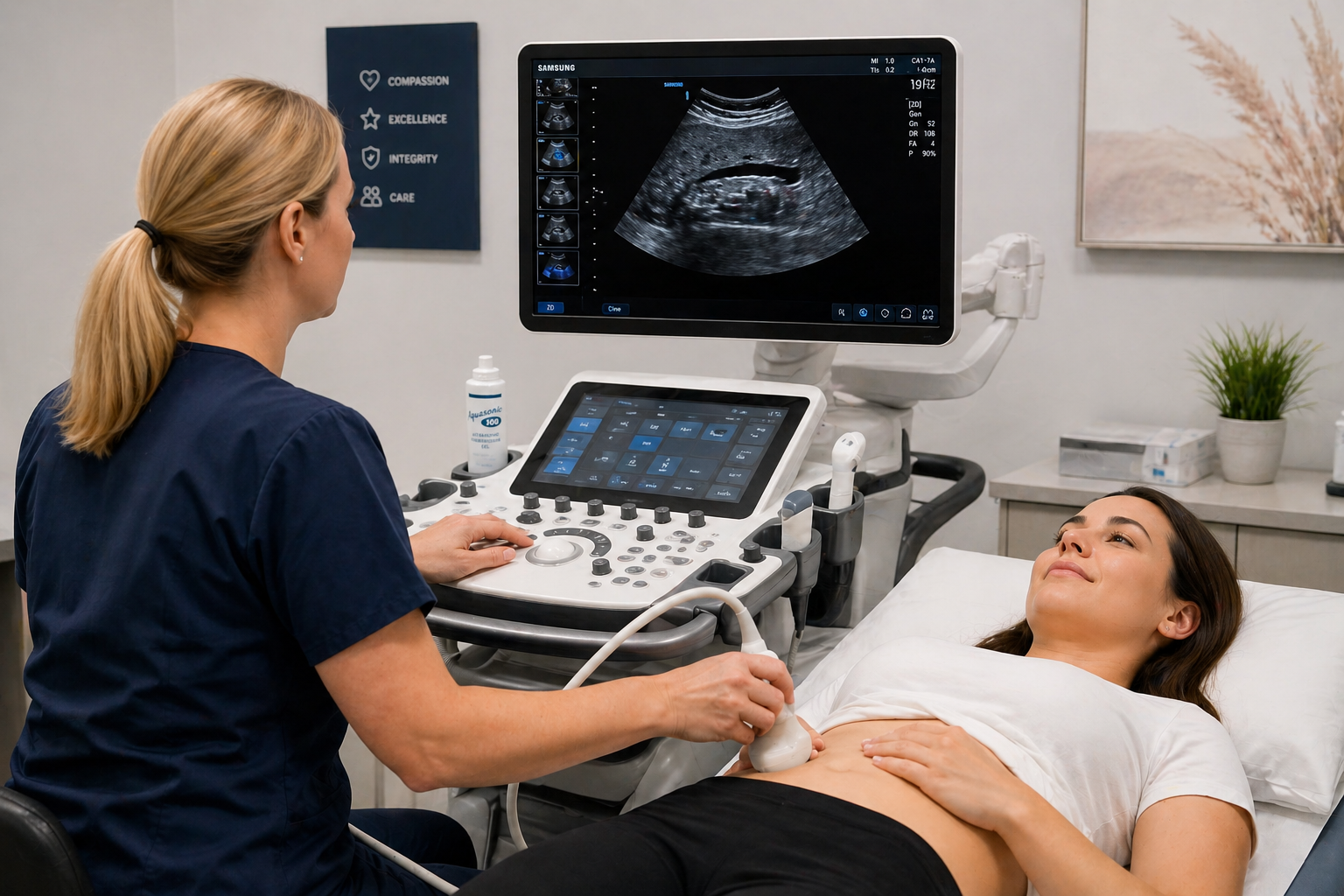
During the appointment, a trained sonographer will apply a small amount of gel to the skin and use a handheld device called a transducer to capture images of the area being examined. The gel helps transmit sound waves between the transducer and the body, allowing clear images to be produced.
The sonographer may move the transducer across the skin or adjust the angle slightly to obtain the most useful images. In some cases, gentle pressure may be applied to help visualise deeper structures.
Our team takes care to explain each step of the examination so patients understand what is happening throughout the scan.
A Safe And Non-Invasive Imaging Method
One of the major advantages of ultrasound imaging is that it does not use ionising radiation. Instead, it relies on sound waves to produce images of internal structures.
This makes ultrasound a safe and widely used diagnostic tool for people of all ages. It is commonly used when ongoing imaging is required or when clinicians need to assess soft tissue structures in detail.
While ultrasound is highly effective for many clinical applications, the type of imaging recommended will always depend on the patient’s symptoms and the referring practitioner’s clinical assessment.
Diagnostic Imaging Supporting Local Healthcare
Ultrasound imaging is frequently requested by general practitioners, specialists and allied health professionals when investigating a wide range of symptoms.
By providing local access to professional ultrasound services, Port Macquarie Radiology helps support healthcare providers across the region in diagnosing conditions and managing patient care.
The clinic aims to deliver reliable imaging services that contribute to accurate diagnosis while ensuring patients feel comfortable and supported throughout the process.
Book Your Ultrasound Appointment
If you have been referred for an ultrasound examination, our team can assist with scheduling your appointment and providing any preparation instructions that may be required.
Port Macquarie Radiology provides professional ultrasound services for patients across Port Macquarie and the Hastings Valley, supporting both routine diagnostic assessments and ongoing medical care.
Ultrasound Scanning FAQs
-
Most ultrasound examinations require a referral from a GP or specialist.
-
Ultrasound scans are generally painless. Some pressure may be applied during the examination to obtain clear images, but the procedure is typically very comfortable.
-
Some ultrasound examinations require preparation such as fasting or drinking water beforehand. If preparation is required, instructions will be provided when booking your appointment.
-
Most ultrasound examinations take between 15 and 30 minutes depending on the area being examined.
-
Ultrasound images are reviewed by a radiologist and the report is sent to your referring practitioner who will discuss the findings with you.